What we automate
Intake, document routing, notifications, approvals and research assistance, after assessing whether the process is ready to automate.
 Let’s talk
AI & automation
AI agents, automated workflows and integrations for your business processes, with clear boundaries and human oversight.
Discuss a workflow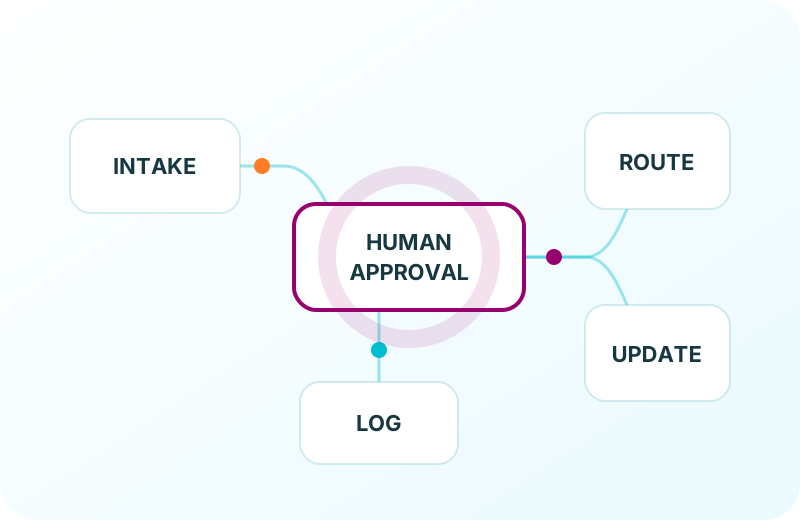
We assess the process first and recommend rules-based automation when it is the more dependable option.
Intake, document routing, notifications, approvals and research assistance, after assessing whether the process is ready to automate.
Assistants for inquiries, qualification, scheduling, research and internal retrieval within defined boundaries.
Connect forms, CRM updates, documents, reporting and approvals to reduce manual handoffs.
Help people find authorized information in approved documentation, policies and product or service knowledge.
Connect AI capabilities with websites, CRMs, internal applications, customer portals and APIs.
Build a focused application when a simple integration cannot solve the workflow.
Our approach
Define the job, the data, the boundaries and the approval points first. Validate with real scenarios before increasing responsibility.
The safeguards depend on the data and the consequences of a wrong action. We define them before an automation receives more responsibility.
No. Rules-based automation is often safer, faster and easier to maintain. AI is useful when language, retrieval or judgment support is part of the task.
Some low-risk actions may be automated after testing, but higher-impact actions should use approvals, limits and escalation paths.
Often, yes. The first step is to assess the APIs, permissions, data boundaries and reliability requirements of the existing stack.
With a workflow conversation: what happens today, where work stalls, what information is involved and what a safe improvement would look like.